“I can’t put my name on something AI made up.”
Every sentence traces back to the notice or your own files.
The draft is written only from two sources: the funding notice and the files you uploaded. You approve the concept first. Each section is then checked against the review criteria, and any name, number or citation the draft cannot support is flagged as must-fix.
Closed-book drafting
Sections are written from the notice and that client’s knowledge base, not from general knowledge about your field. That is a constraint on purpose: what the draft says, you can find in your files.
The concept is approved before drafting
The hook, what sets you apart and the guardrails from the notice come first, as a concept you change in chat and approve. Every section argues the plan you agreed to, so a long draft does not drift.
Each section checked against the criteria
The responsiveness check compares every section with the review criteria and required elements in the notice. What is not yet answered is listed, section by section.
Unsupported details flagged as must-fix
Names, numbers and citations that are not in the notice or your files are flagged in the quality report as must-fix items. Missing facts are marked as gaps, never filled in.
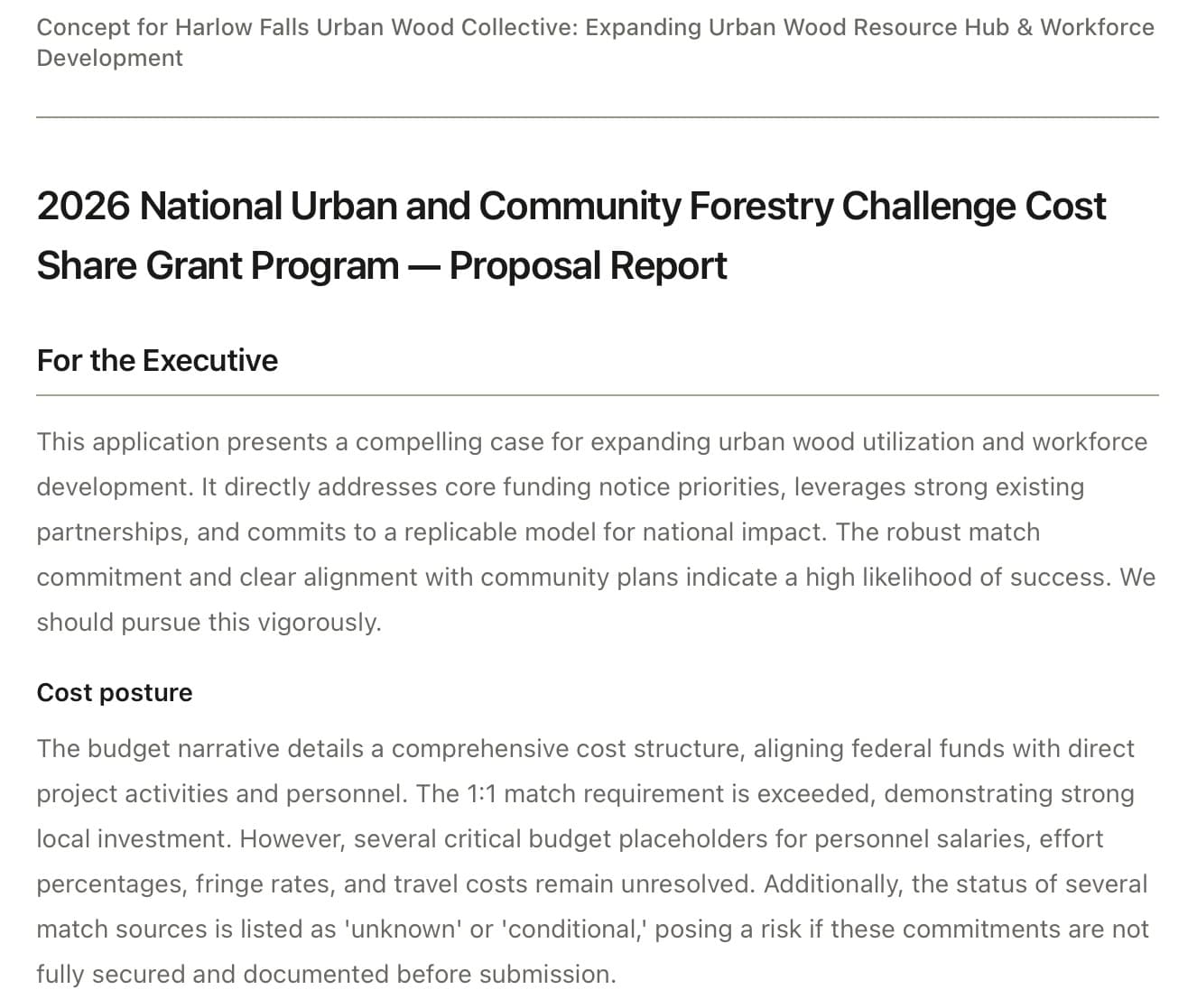
What it looks like
How it works for you
For consultants
Hand a client a draft you can defend line by line, built from their own files.
More for consultantsFor nonprofits
Your mission, outcomes and numbers, in your words, with nothing added to fill a page.
More for nonprofitsFor leadership teams
Sign off on a draft whose claims your team can point to in your own documents.
More for leadership teamsFor public-sector grant staff
Long NOFOs answered from your plans and data, with each criterion checked.
More for public-sector grant staffQuestions
What does the draft draw on?
Only the funding notice, the files in that client’s knowledge base, and the concept you approved. We call it closed-book drafting. When a fact is not there, the draft marks the gap and the report lists it.
Can it still get something wrong?
Yes, which is why it checks itself and tells you. The quality report lists anything it could not support from the notice or your files, and you review every draft before it goes anywhere.
Does it make up past performance or partners?
It is built not to. Past performance, partners and figures come from your files. If they are not there, the draft says so and the report lists the gap for you to fill.
How is it priced?
Credits, bought as you go, with no subscription and no seats. Each run uses only what it needs. Making an account is free, and credits never expire while your account is active.
The other problems it solves
- Know if it is worth pursuingEligibility, criteria, match and deadlines pulled from the notice, with a fit score and gaps from your files.
- See what is weak before reviewers doEvery section checked against the review criteria, with a compliance gap list and must-fix items.
- A concept to approve, then a fast draftA concept and a Concept Deck to get sign-off before drafting, then a full draft in about 10 minutes.
- Your files stay yoursEncrypted, private to your account, never sold, never used to train AI. See exactly where your files go.
A draft you can put your name on.
Start free
Making an account is free. Uploads, concepts and drafts run on credits you buy as you go.
Want the costs first? See pricing.